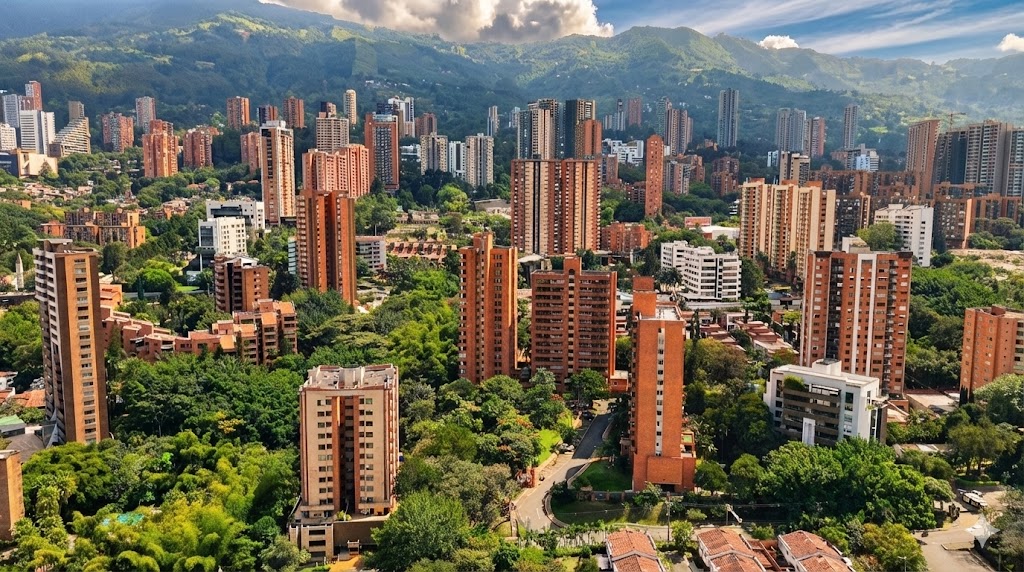
Living in Medellín, Colombia: pros, cons, cost of living, rentals, safety and nearby alternatives.
Updated 6 November 2026.
Medellín attracts people seeking a mild climate, a lively urban environment, accessible services and opportunities to work remotely or start a business. However, the idea that anyone can “live like a king” on US$2,000 a month now needs considerable qualification. Housing costs, exchange-rate movements and changes in tourism have affected the budgets of both residents and visitors.
This guide offers a balanced perspective for anyone considering moving to Medellín, spending several months there or comparing its neighbourhoods with neighbouring towns. It covers the city’s familiar attractions alongside economic and housing developments, while distinguishing official statistics from estimates that depend on individual circumstances.
Why do so many people want to live in Medellín?
A spring-like climate, but substantial rainfall
Known as the City of Eternal Spring, Medellín has relatively mild temperatures throughout the year because of its altitude. Conditions nevertheless vary according to the neighbourhood, the floor of an apartment building and exposure to direct sunlight. Rainy seasons can bring heavy downpours, particularly around April–May and October–November.
The possibility of enjoying parks, outdoor terraces, walking routes, local shops and cafés for much of the year is a genuine advantage. Before renting, however, it is worth checking an apartment’s ventilation, indoor temperature and humidity.
Neighbourhood-centred daily life
In parts of the city, many everyday needs can be met on foot: groceries, pharmacies, gyms, bakeries, restaurants and public transport. This proximity contrasts with the long journeys familiar to residents of some North American cities. Yet steep streets, traffic and night-time safety differ considerably between districts.
Best neighbourhoods in and around Medellín
- Laureles: relatively flat streets, local shops, restaurants and a residential atmosphere, although some roads are busy and noisy.
- El Poblado: a wide choice of services, visitor accommodation and international restaurants. Areas such as Provenza and Parque Lleras are particularly active at night and tend to be expensive.
- Envigado: a neighbouring municipality offering residential districts, local commerce and options for families or extended stays.
- Sabaneta: a more compact municipality connected to the metropolitan transport system, but also experiencing denser development and rising property costs.
- Belén and other established districts: alternatives well worth visiting in person, as conditions can change significantly from one street to the next.
Colombia’s residential estrato classification alone is not a guarantee of safety, peace and quiet or construction quality. It is more useful to visit a building by day and at night, check transport connections and compare several genuine rental offers.
Cost of living in Medellín: is it still cheap?
Why the US dollar and Colombian peso matter
Anyone earning in dollars, pounds or euros needs to watch the exchange rate as well as Colombian inflation. When the peso strengthens against the US dollar, the same dollar income buys fewer pesos. A foreign salary or pension may therefore stretch less far even if local prices expressed in pesos have not changed.
As a dated reference, on 6 November 2026 Colombia’s official representative market exchange rate was approximately COP 3,228.26 to US$1. At that rate, US$2,000 was worth about COP 6.46 million, before any transfer or exchange fees. Rates change daily; check the Superintendencia Financiera de Colombia for the latest official reference rate.
For that reason, it is sensible to prepare a budget in Colombian pesos and allow for currency fluctuations. Planning an entire year on the assumption that the dollar will retain the same value is risky.
How much money do you need each month?
There is no universal figure. Costs depend on whether accommodation is shared or self-contained, the location, the type of tenancy, medical cover, transport and how often you eat out. A budget of around US$2,000 a month can support a comfortable but fairly moderate lifestyle in certain circumstances. It does not automatically pay for luxury accommodation and frequent fine dining in Medellín’s most expensive districts.
With US$3,000 a month or more, there may be additional scope for a better-located furnished property and regular leisure activities, depending on household size. A high-spending lifestyle involving premium apartments, personal services and upscale restaurants can cost substantially more. These are illustrative budgets, not official averages or guaranteed outcomes.
Everyday expenses: where money can be saved
- Groceries and food: locally produced items and inexpensive set lunches are often better value than imported groceries and upmarket dining.
- Restaurants: eating out every day, especially in tourist areas, can consume a substantial part of the monthly budget.
- Transport: the Metro, buses, Metrocable routes and app-based transport offer different choices. Prices vary by journey and demand.
- Personal services: private lessons, domestic assistance and certain local services may remain comparatively affordable for people paid in stronger currencies.
- Gym, internet and utilities: compare packages carefully and check whether electricity, water, internet and building management charges are included in the rent.
Before relocating, prepare an individual budget covering accommodation, groceries, utilities, healthcare, transport, taxes, leisure and unexpected expenses. Keep accessible emergency funds, but do not confuse an emergency reserve with advance rental payments demanded by a landlord.
Renting in Medellín: Airbnb, furnished flats and traditional tenancies
An increasingly competitive short-stay market
Short-term accommodation has reshaped some parts of Medellín. According to the city government, occupancy in tourist accommodation homes averaged 50.5% in the first half of 2026, compared with 52.2% in the corresponding period of 2025. Hotel occupancy averaged 59.0% during the same six months. This indicates that visitor properties are not continuously booked, although performance differs by season, location and property quality. Source: Medellín’s official first-half 2026 tourism report.
For stays lasting several weeks, it may be worth asking a host whether a monthly rate or longer-stay discount is available. No particular discount is guaranteed. Always compare the final price, service charges, included utilities, cancellation terms and house rules.
Conventional residential rents versus holiday lets
Longer residential tenancies, particularly for unfurnished properties, can cost considerably less per month than accommodation marketed to visitors. In exchange, they can involve more paperwork, upfront expenses and longer commitments, making them unsuitable for some short stays. Agencies or landlords may request evidence of earnings, credit history or a legally acceptable guarantee.
Colombia’s residential estratos run from 1 to 6 and affect the subsidy or contribution structure of certain public utilities. They should not be treated as a fixed formula for calculating either rent or neighbourhood safety.
How to avoid rental scams
- View a property in person, or ask a reliable local representative to inspect it.
- Verify the advertiser’s identity, authority to let the property, real address, condition of the accommodation and contract terms.
- Avoid sending money to supposed owners who create pressure with claims of “many other interested tenants” or refuse to arrange a viewing.
- Compare the full cost and keep written copies of agreements, receipts and communications.
- When arriving for the first time, consider booking a few days of verifiable accommodation while viewing more permanent options.
A real location on Google Maps, attractive photographs or a photocopy of an identity card is not, by itself, evidence that the advertiser is entitled to let a property.
Rules governing tourist accommodation
Tourist accommodation in Medellín must comply with applicable requirements, which may include registration with the Registro Nacional de Turismo (RNT), compatible land use and permission under a building’s co-ownership regulations where relevant. The city is also debating changes to its Plan de Ordenamiento Territorial (POT), or land-use plan. A proposal still under debate should not be described as legislation already in force. See the city’s guidance on lawful short-term rentals and its explanation of the proposed POT changes.
As an indication of how much the sector has grown, city figures put the number of registered tourist-housing providers at 8,322 in 2026, up from 521 in 2019. Some of this increase reflects the formal registration of properties already operating rather than entirely new accommodation. The number alone does not demonstrate a year-on-year rise in Airbnb listings. Source: Medellín’s official housing and land-use assessment.
Tourism in Medellín: growth, change and local tensions
Medellín continues to offer a wide range of cultural, culinary, shopping and leisure activities, but its tourism model is changing. Debate about neighbourhood life, short-term rentals and nightlife is especially visible in El Poblado, Provenza, Parque Lleras and Laureles.
Lower foreign visitor spending should not be mistaken for the disappearance of tourism. For the first half of 2026, Credibanco transactions reported in the city’s tourism figures showed an 18.2% reduction in spending by foreign visitors compared with the comparable period, while recorded domestic spending increased by 17.5%. These figures describe activity processed through that payments network, not every tourist purchase in Medellín. Source: Medellín Tourism Intelligence System.
Visitors interested in food, museums, music, urban history, Spanish lessons or excursions around Antioquia can find plenty to do. Those seeking a quiet residential life, on the other hand, may prefer to avoid buildings used for frequent short lets and streets with intensive nightlife.
Safety in Medellín: realistic risks and useful precautions
Safety depends on the neighbourhood, time of day, journey and individual circumstances. Mobile phone theft, opportunistic robbery, internet fraud and some crimes targeting visitors are risks that should not be minimised. Scopolamine and other substances used to incapacitate victims have also been associated with robberies and social encounters.
- Keep phones and valuable belongings out of sight when they are not needed.
- Use identifiable transport services and check the vehicle registration and driver details.
- Do not leave drinks unattended or accept drinks or food from questionable sources.
- Avoid carrying substantial amounts of cash or unnecessarily exposing financial information.
- If a situation feels suspicious, prioritise leaving and seeking assistance. In an emergency, call 123.
These precautions are relevant to residents and tourists, irrespective of nationality or gender. Risk should not be judged from someone’s origin or appearance; pay attention to specific behaviour and circumstances instead.
Transport, traffic and everyday journeys
The Metro system, Metrocable routes and integrated buses make many journeys more practical, and some districts are particularly walkable. At the same time, congestion, motorbikes, steep roads and construction work can extend travel times. Living just a few kilometres from somewhere does not necessarily mean getting there quickly.
Before signing a rental agreement, check the actual journey to workplaces, educational institutions, hospitals or shops you will use regularly, particularly during rush hour.
Air quality, urban heat and noise
The geography of the Aburrá Valley can make it harder for pollutants to disperse. Air quality can deteriorate during certain periods of the year. The SIATA environmental monitoring system provides useful weather and air-quality information, particularly for people with respiratory sensitivities.
Although Medellín is famous for its temperate climate, some apartments retain substantial heat because of their orientation, floor level, construction materials or poor ventilation. Road noise, building work and nightlife also warrant attention before committing to a tenancy.
Whenever possible, visit the flat with its windows both open and closed, and at different times of day and night, to assess the true conditions.
Language, cultural integration and community life
Speaking Spanish makes it much easier to communicate with neighbours, landlords, doctors, officials and shopkeepers. English may be sufficient in some visitor-oriented settings, but a prolonged stay becomes simpler when you know the language and respect local customs.
An influx of residents earning international incomes can create economic opportunities while also putting pressure on rents and local businesses in particular districts. Supporting neighbourhood shops, respecting residents’ routines and avoiding the treatment of Medellín merely as a cheap consumer destination can help people live together more comfortably.
Remote work, starting a business or retiring in Medellín
Medellín may offer opportunities to people serving international clients, running digital operations or hoping to reduce some costs compared with major world capitals. Actual savings, however, depend on the business model, taxes, healthcare, earnings and currency fluctuations. Being paid in dollars does not automatically make a business profitable.
Foreign nationals must comply with Colombian immigration rules when staying or carrying out work. Colombia has a digital nomad visitor visa with specific eligibility criteria, and entering as a tourist should not be confused with unrestricted permission to work locally. The official visa guidance addresses remote work for foreign clients, income requirements and health cover. Check the Colombian Ministry of Foreign Affairs digital nomad visa information before arranging a move.
Retirees and others on fixed incomes should also account for medical care, insurance, taxes and possible exchange-rate movements. A trial visit provides a more reliable basis for making decisions than relying solely on videos or social media posts.
Local shopping and retail opportunities: El Hueco
One of Medellín’s best-known shopping districts is El Hueco, in the central Guayaquil area, with a concentration of shops selling clothes, footwear and household goods. Compared with shopping exclusively online, it offers the chance to inspect products, compare several nearby shops and take purchases home immediately.
In some shops it is normal to ask “¿cuánto es lo menos?” (“What is your best price?”) or to request a better deal when buying several items, provided the conversation remains polite. Not every price is negotiable; request a receipt or invoice where appropriate.
Healthcare, hospitals and everyday services
Medellín is an important regional centre for medical care, commerce and education. It has hospitals, specialist services and many clinics, although access, insurance coverage and costs depend on individual entitlements and the healthcare arrangements in place.
Anyone planning a long stay should check medical eligibility, regular prescriptions, existing conditions, emergency care and how ongoing treatment would be managed before travelling.
Alternatives to living in Medellín itself
People looking for lower density or cooler surroundings may wish to explore other parts of Antioquia. Distance alone does not tell the whole story: road travel times can vary substantially with traffic and the time of day.
- Rionegro: local services, shopping and proximity to José María Córdova International Airport.
- Llanogrande: larger residential developments and more spacious homes, although prices can be high.
- El Retiro: a quieter, cooler environment with a different range of services from those available in the city.
- La Ceja: an option for people seeking lower temperatures and a different everyday pace.
- Envigado and Sabaneta: metropolitan alternatives offering continued access to Medellín, although neither is free from traffic or increasing development.
Before choosing a nearby town, compare the full housing cost, transport availability, healthcare provision and how often you would actually need to travel to Medellín.
Advantages and disadvantages of living in Medellín
Reasons to consider it
- Relatively mild weather and outdoor activities throughout the year.
- A broad selection of shops, restaurants, health services and cultural activities.
- Neighbourhoods where many everyday tasks can be completed on foot.
- Metropolitan public transport and access to other parts of Antioquia.
- Opportunities for people who can legally and reliably serve international clients.
Reasons it might not be the right choice
- High rents in tourist-oriented areas and substantial differences between rental arrangements.
- Noise, congestion, air pollution and apartments that retain too much heat.
- Safety concerns and property-rental scams.
- Cost-of-living uncertainty for people earning in foreign currencies.
- Bureaucracy, rental contracts and social integration can be difficult without Spanish.
Frequently asked questions about living in Medellín in 2026
Can you live in Medellín on US$2,000 a month?
Yes, in certain circumstances, particularly with moderate rent and controlled spending. It should not be treated as a guaranteed budget for luxury accommodation, frequent restaurant visits and premium personal services.
Is it cheaper to rent directly than through Airbnb?
Traditional residential contracts can cost less per month, but they usually require a longer commitment, more documentation and additional checks. Compare the total cost, length of stay and legal responsibilities, not just the advertised monthly rent.
Are Laureles and El Poblado safe places to live?
No district can provide an absolute guarantee of safety. Both contain quite different streets and surroundings. Consider the exact location, building access, day-to-day journeys and local conditions rather than relying only on the district name.
Is tourism in Medellín declining?
Some indicators show an adjustment, including lower spending by foreign visitors recorded through a major payments network. That does not mean tourism has disappeared. Visitor numbers, accommodation occupancy and spending are different measures and should be assessed separately.
What should you check before moving?
Your budget in pesos, the exact neighbourhood, rental terms, security, medical cover, immigration requirements and the real travel time to the services you will need.
Conclusion: is living in Medellín worth it in 2026?
Medellín continues to offer meaningful advantages, but describing it as a guaranteed low-cost luxury destination is no longer realistic. Exchange-rate changes, differences between neighbourhoods, rental conditions and developments in tourism call for more careful decisions.
The best approach is to visit first, compare real properties, calculate expenses in pesos and picture an ordinary day of life rather than just a holiday. For some people Medellín will be an excellent fit; others may find a better balance of peace, climate, services and costs in nearby towns.
Sources and editorial approach
This article was updated using a research briefing on Medellín’s economy, property market and tourism and checked against publicly available information as of November 2026. Claims and statistics in the briefing that lacked independent confirmation have not been presented as established facts. Personal spending estimates are illustrative rather than official averages.
- Medellín city government: tourism figures for the first half of 2026
- Medellín city government: tourist accommodation and proposed land-use changes
- Medellín city government: short-term rental requirements
- Colombian Ministry of Foreign Affairs: digital nomad visitor visa
- SIATA: environmental and weather information for the Aburrá Valley
- Colombia’s Financial Superintendence: official exchange-rate information
Keep reading on LugarLatino
- Bancolombia accounts for Colombians living abroad (in Spanish)
- Parqués: the Colombian board game (in Spanish)
See more in our Colombia section.